

Five Keys to Successful Outcomes with PRP Injections
/Quality Equipment- we’ve chosen a PRP system created by one of the industry’s leaders in orthobiologic injections.. This is our 5th PRP system to use over the past 12 years. Thus, we are always searching for the best option to produce a high-quality PRP solution.
Appropriate Selection of Patients- we attempt to choose patients and conditions that are excellent candidates for PRP injections. Admittedly, not every patient is an ideal candidate, yet their options may be limited in terms of other forms of treatment, or they are willing to have PRP due to its excellent risk-benefit and cost-benefit ratio compared to more invasive treatments. Partial tendon tears, plantar fasciitis and osteoarthritis of the knee, hip and shoulder comprise 95% of our PRP injections.
Appropriate Pre-Procedure and Post-Procedure Instructions and Compliance-little things can be the difference between PRP succeeding or not succeeding or between a good outcome and a great outcome. For example, it’s important for a patient to be off any anti-inflammatories at least a week before and 2 weeks after a PRP injection. It’s also important to rest the treatment area, and this form of rest really varies depending on the patient and their area treated. A patient’s timetable for return to exercise and/or rehabilitation must be carefully outlined.
Quality Preparation of the PRP solution- not all PRP is the same. The platelet concentration and number of platelets can vary and are important aspects of the potential success of PRP. How much blood we take from the patient and the PRP system dictate these numbers. Also, we typically create a leukocyte-poor (low numbers of white blood cells) for joint injections and leukocyte-rich (higher white blood cells and the highest number of platelets) solution for tendon injections.
Accuracy of the Injection, Preferably with Ultrasound Guidance- using ultrasound for the injection often results in less pain, lower risk, and greater accuracy. We place the PRP exactly where it needs to be and avoid hitting other structures like bone, cartilage, nerves and blood vessels. We often say, “if you’re going to invest your time and money in this procedure, don’t you want it done as precisely as possible?”
More medical professionals are performing platelet-rich plasma injections than ever. This innovative treatment is not going away and will only evolve in the years to come. If you think you are a first-time or repeat candidate for a PRP injections, then come see us!
F. Clarke Holmes, M.D.
Hamstring Strains – The All‑Too Common Injury
/Picture this….an explosive movement that involves hip flexion and knee extension. What could go wrong? Well, this is the mechanism of a hamstring strain or tear. The classic actions are jumping, kicking, or running. Occasionally, a pop will be felt. We see hamstring strains and tears in our practice often, and frequently, the patient is mistreating their hamstring pathology by the time they get to us. Because of this, we hope this blog will provide education on appropriate first-line treatment before and when you seek medical attention.
First, can anyone name the three hamstring muscles? The answer is: Biceps femoris, semitendinosus, and semimembranosus. What’s the common injury in Major League Baseball: you’re thinking a shoulder or elbow problem, right? Not so fast…a hamstring strain is the most common injury in baseball, and likely the NFL and Major League Soccer as well.
Hamstring strain/tear prevention: proper warm-up, dynamic stretching, adequate rest and recovery, and strengthening. Specifically, the quadriceps muscles tend to get a lot more attention than our hamstrings because they are “look good” muscles. However, neglecting the hamstrings and creating a muscle imbalance definitely increases one’s risks of a hamstring injury. Also in regards to prevention, when a hamstring starts to feel tight or crampy, then that’s a warning sign. It’s then wise to minimize those explosive activities that often lead to a major strain.
In terms of radiographic diagnosis, x-rays are primarily only helpful to evaluate a patient for an avulsion fracture when the pain and strain is near the ischial tuberosity. These fractures are most common in skeletally immature patients such as younger teenagers with open growth plates. Musculoskeletal ultrasound, one of our areas of expertise, is a great and inexpensive way to visualize and grade hamstring strains in our office. Finally, an MRI is the most complete test to visualize a hamstring injury, but is not necessary in most patients and certainly the most expensive and time-consuming test.
Complete tears: If a complete tear is found, particularly proximally (at the origin at the “sit bone”), then surgical reconstruction is the typical treatment. I once knew someone who had liquid courage, (a.k.a., too much alcohol) on board and attempted to do the splits. He made it down into the splits but the explosiveness of the movement caused his hamstring to avulse off of the ischial tuberosity. He had to undergo surgery to reattach it. Needless to say, don’t try to do the splits, folks! Fortunately, complete tears are rare.
Strain/partial tear: This is most commonly the hamstring pathology we see. Hamstring injuries take a long time to heal. With proper treatment, this can be accelerated. The BIGGEST piece of advice I can give initially after the strain is DO NOT STRETCH the hamstring. It will commonly feel tight and feel like you need to stretch, but this will only strain the tendon and muscle belly further. Rest and activity modification are important steps in recovery. This even means to not lead up the stairs with the affected leg or bending at the waist, but instead with at your knees. Any activity that can tug on the hamstring, you should avoid. Other treatment options include thigh sleeve, steroid injection, physical therapy, and platelet-rich plasma (PRP) injections under the guidance of musculoskeletal ultrasound. PRP becomes a great option for proximal hamstring tendon problems that persist beyond a few months. We most commonly see this problem in long distance runners.
Recurrence: hamstring injuries are highly prone to recurrence. This is often due to a return to activity or sport too quickly and/or inadequate rehabilitation. This is why having an expert guide you in your recovery often decreases your risk of re-injury.
In a nutshell, if you have an acute or chronic hamstring injury, it’s best to seek medical attention as opposed to managing this yourself. Proper diagnosis, grading of the strain, discussion of treatment and prevention strategies along with a return-to-play/exercise plan is what we offer our patients.
As always, let us know if we can be of assistance to you!
Taylor Moore, NP and F. Clarke Holmes, M.D.
Tiger Woods and You!
/You or someone you know may have something in common with Tiger: plantar fasciitis. Tiger dropped out of the Masters golf tournament last weekend due to severe heel pain caused by plantar fasciitis. This all-too-common orthopedic condition afflicts a huge number of middle-aged Americans every year. The most common symptoms are heel pain when first getting out of bed, when barefoot or with prolonged walking, running or sports. Here are some key “Dos” and “Don’ts” when it comes to plantar fasciitis:
What To Do When You Have Plantar Fasciitis:
1) Seek medical attention early: We have many tools in the toolbox to treat this condition, but we first need to need to confirm the diagnosis, set-up a multi-faceted treatment plan, and guide you on your prognosis. Ultrasound, which can be done in our office, is by far the best imaging study to see the plantar fascia. This factors into our concept of PIO- Proactive Interventional Orthopedics.
2) Wear good footwear at ALL times: when in the house, in the yard, at the gym, at the pool, while shopping, going to that concert, socializing with friends and at church. Good footwear means very supportive, not too flexible, and not too cheap. Cheap unfortunately often means lower quality.
3) Consider inserts/orthotics for your shoes: over-the-counter can get the job done, but you’ll need some advice on how to choose these. A high-quality athletic shoe store or a visit to your sports medicine doctor can supply that information. However, custom orthotics prescribed by your physician may really be what you need. We are fortunate to have custom orthotic specialists that work directly with our practice.
4) Consider physical therapy as it’s beneficial for most patients: many cases of PF are related to biomechanical problems, meaning that your calves are too tight, your foot pronates or supinates, your foot muscles are weak or you are overweight. Physical therapy along with weight loss in some individuals can help correct these biomechanical problems.
5) Realize that 10-20% of cases of PF will need an advanced treatment: in our practice, our first-line innovative and advanced treatment for stubborn PF is a platelet-rich plasma injection. PRP uses your own blood and the concentrated growth factors we have produced to reduce inflammation and pain while stimulating a healing response. If this fails, then we move on to a minimally-invasive surgery called a percutaneous fasciotomy using the Tenex system.
What Not To Do When You Have Plantar Fasciitis:
1) Stretch the bottom of the foot: many cases of PF involve tears in the plantar fascia. Although stretching the calf can help, stretching the bottom of the foot often irritates the fascia and can inhibit the healing process.
2) Buy expensive orthotics that are rigid or produced by an “orthotics store”: in our experience, these tend to be very uncomfortable for patients and unsuccessful in treating patients’ symptoms. Stick with an orthotics specialist recommended by an orthopedic/sports medicine physician.
3) Have multiple steroid/cortisone injections: although offered by some orthopedic doctors and podiatrists, we rarely offer these injections for PF and essentially never do more than one. Steoid injections can contribute to further tearing and often impede healing. Some patients feel better in the short term with steroid injections, but are worse in the long term.
4) Run/Walk through the pain: unfortunately, PF will just not get better if you keep doing the things that are causing the problem. So, a period of complete rest or relative rest will be necessary for PF to improve. Relative rest can mean dialing down your walking/running frequency or distance to the point that you stay below your pain threshold.
5) Become impatient: recovery from PF is often in the range of months, not days or weeks. So, once a treatment plan is in place, you’ll have to be patient. We often construct a Plan A, Plan B and Plan C. Each plan has 2-4 treatment entities within it and we insitute these for 1-2 months, judge their success and then move on to the next plan if we are not seeing the expected results.
In summary, plantar fasciitis is a condition that requires methodical treatment under the care of an experienced physician. Don’t just trust the advice from your non-medical friend, Dr. Google or YouTube. We are always here to help!
F. Clarke Holmes, M.D.
What is a Sports Medicine Provider, and Can I See One?
/You may be asking yourself what is a Sports Medicine provider? To be honest with you, I only found out the difference between sports medicine and general orthopedics in my last semester of Nurse Practitioner school. Because of this, I want to provide more insight into the differences so that you can be educated and empowered in choosing an orthopedic specialist that best fits your needs.
Sports Medicine is a specialty underneath the orthopedics umbrella. Just like you can see specialists who see only hips, shoulders and knees, foot and ankle, or the spine, you can see a sports medicine specialist. Dr. Clarke Holmes and I are Orthopedic Sports Medicine Providers. What might differentiate a sports medicine provider from a general or specialty orthopedist? Here are few key points:
1. One stop shop: Sports Medicine Providers see orthopedic conditions from the top of your head (concussions) to the tip of your toes, and everything in between
2. Conservative treatment options versus jumping right into surgery: Dr. Holmes and I will always be transparent with our patients if surgery is the best option, but why not try utilizing all the nonsurgical options first if surgery is not necessary?
3. We are experts in minimally-invasive procedures that can either prevent surgery or be an alternative to surgery: For example, Platelet Rich Plasma (PRP) injections are very successfully used for partial tendon tears and osteoarthritis of numerous joints. See our PRP blogs or check out our social media posts to learn more about PRP.
4. Improved accuracy of our injections by utilizing musculoskeletal (MSK) ultrasound guidance. Ultrasound is becoming a mainstay in the sports medicine world, and we’ve used MSK ultrasound for over a decade. We also use this daily to diagnose tendon tears, bursitis, joint swelling and ganglion cysts.
5. Holistic treatment: We care about the patient as a whole person and do not see them as just a body part, a diagnosis or a potential surgery. We develop a plan of action with the patient that considers what activities they like to do, their occupation, weight, nutrition, mental health and any other contributors to formulate an individualized treatment plan.
6. YOU DO NOT HAVE TO BE AN ATHLETE TO SEE A SPORTS MEDICINE PROVIDER. Yes, we experts in treating athletes ranging from the youth to the professional ranks, but we also treat those who do not consider themselves an athlete. In addition, we see patients of all ages and all activity levels. One of my favorite things to treat is arthritis, even in those who do not exercise and just want their pain to decrease and daily function/activities to improve.
Hopefully this has provided clarification on the differences between a sports medicine orthopedic specialist and a other types of orthopedists. As always, let us know if we can be a resource to you!
Taylor Moore, NP
PRP And The Three "Es"
/This sounds like the name of a band, right? Well, we’re referring to platelet-rich plasma (PRP) injections and three important words that start with an “E” when discussing these procedures.
First, a quick reminder that we use your own blood obtained from an arm vein, a special kit, a centrifuge and a precise separation process to create the PRP. PRP is then a great treatment choice for osteoarthritis of the knee, hip, shoulder and other joints. It’s also an effective treatment for tennis and golfer’s elbow, plantar fasciitis, Achilles and rotator cuff tendon problems, just to name a few. When considering who will perform your PRP injection, you absolutely need to consider the three Es:
Experience: At Impact, Dr. Holmes has been performing PRP injections since 2009. Very few physicians in the Nashville area can claim that level of experience. In addition, we are giving more PRP injections than ever as more and more patients are realizing the benefits of this procedure. Thus, in 2009, we may have given 1-2 PRP injections a month, and now, we give 12-15 a month on average.
Expertise: With experience comes expertise, yet expertise also comes with putting in the work. This means attending conferences, reading and interpreting studies, participating in webinars and interacting with peers who are also experts in the field. Hardly a week goes by that we don’t spend some time fine tuning our expertise in this field. Next, we’ve been pioneers in the sports medicine industry through our ultrasound-guided injections. 14 years of experience with ultrasound and over 10,000 injections later, we consider this to be an area of expertise.
Equipment: PRP is not just PRP, meaning some kits, equipment and the preparation process are better than others. Novices in the field tend to choose lower cost and lower quality PRP systems which often produce fewer numbers and a lower concentration of platelets. At Impact, we are on our 5th PRP system over the past decade. These systems continue to improve, and you deserve a high-quality option. Finally, ultrasound-guidance is paramount when having a PRP injection. Don’t you want this high-powered solution to be injected into the precise location? Without ultrasound guidance, you are proceeding “blindly” and can only hope the injection makes it to the intended location.
Considering a PRP injection for your orthopedic condition? Remember the 3 Es and let us know if we can be of any assistance to you!
F. Clarke Holmes, M.D.
Three Common Financial Misconceptions in the Medical World
/Understanding the complexity of various medical expenses can be overwhelming for a patient. We medical professionals are patients too! Even for us, sometimes the numbers just don’t make sense. At Impact Sports Medicine and Orthopedics, our desire is to educate patients regarding the value of these office visits and procedures and their potential out-of-pocket costs, so that they can make informed decisions regarding their health care from both a medical and economic perspective.
Here are three common misconceptions when it comes to medical expenses:
If my physician is not in-network with my insurance company, my medical expenses will be higher: until patients meet their deductibles, they typically will pay out-of-pocket for office visits, diagnostic tests and procedures. The amount a patient pays can also depend on a patient’s out-of-network provisions in their plan and/or the amount an out-of-network provider chooses to bill the patient. Often an out-of-network provider will ask the patient to pay cash, and this amount can be and often is less than the contracted amount an in-network provider has with your insurance. Example: you have Insurance X, a plan that has accepted very few in-network physicians. You have not met your deductible and you see an in-network orthopedic specialist for a consult. You have an office visit and x-rays. Insurance X allows $150 for the office visit and $50 for the x-rays. You now owe that in-network physician $200. Alternatively, you see a provider at our practice as we are in-network with most insurance plans, but not with Insurance X. We charge you $120 for the office visit and $30 for x-rays. Thus, your bill with us is $150, a $50 savings compared to the in-network provider.
If a procedure is not covered by insurance, it will cost me more in the long run: as an example, let’s use a procedure such as a platelet-rich plasma (PRP) injection. PRP has been used in orthopedics for 15 years. It has never been covered by insurance (although it should be in certain circumstances…that’s a whole different conversation). You have stubborn plantar fasciitis. You’ve done all the typical treatments, but your heel still really hurts. You consult with a foot surgeon who offers an open or endoscopic plantar fascia release surgery. Guess what, your insurance covers this procedure! However, you have a $5000 deductible, and you are nowhere near meeting this. This surgery will have charges from the surgery center, the anesthesiologist and the foot surgeon. Let’s say that your total cost for this surgery is $3000 with a 75% success rate, a 4-month recovery and some risk of additional complications. Compare this to one or two PRP injections, with each injection costing you $800. PRP, in our opinion, will have similar success rates and recovery times with fewer complications. $1600 for PRP versus $3000 for the surgery, even though the surgery is “covered by insurance.”
When it comes to an office visit or the same procedure done at different practices, insurance companies pay or allow the same amount for each physician/practice: did you know that all practices, hospitals and other medical businesses have contracted rates of payments with private insurers (non-Medicare, non-Medicaid)? If a physician is part of a bigger organization such as a hospital or a large private practice, then that group typically has greater negotiating power and can obtain higher reimbursement rates from the insurance companies. These rates have nothing to do with the quality of medical care, the training or experience level of the providers or the success rates of their interventions. So, let’s say you see a physician associated with a hospital system. You haven’t met the deductible, and you are billed for a Level 4 new patient visit. Your insurance allows $200 for that visit to that provider. Alternately, your household family member sees a physician at a smaller practice like ours, also is billed for a Level 4 new patient visit, yet the same insurance only allows for $150 for that visit, even though the same level of care was provided. So, you owe $50 more to that hospital-based practice than your family member owes to the smaller private practice. Thus, it’s important to realize that often cost really does vary based on who you are seeing, and your cost is not associated with the quality of the care.
At Impact Sports Medicine, cost education and financial transparency are very important to the physician-patient relationship. We strive to provide the highest quality of care for a reasonable out-of-pocket cost to you.
F. Clarke Holmes, M.D.
TENex Gets a 10!
/Are you looking for permanent relief from tennis or golfer’s elbow? Are you tired of having elbow and forearm pain with lifting, gripping and grabbing, even with items like your phone or coffee mug? Are your workouts in the gym or tennis or golf severely hampered by these symptoms? Well, then look no further than the Tenex procedure. This is an innovative minimally invasive procedure developed 13 years ago in conjunction with the renowned Mayo Clinic. Dr. Holmes has performed more Tenex procedures than any other physician in middle Tennessee over the past 10 years.
The Tenex procedure, also termed a percutaneous tenotomy, is a great option for tennis or golfer’s elbow (also known as lateral or medial epicondylitis, respectively) that has not healed with rest and other possible treatments such as medications, physical therapy, injections, or bracing.
We go to the operating room, give the patient an injection of lidocaine only, a numbing agent. We get to avoid the sedation, cost and side effects of general anesthesia (getting put to sleep).
A tiny incision of about 1/4 inch is made. A small hand piece with a needle tip is inserted through the incision. Under ultrasound-guidance, this tip is inserted to the damaged part of the tendon and ultrasonic energy allows the tip to debride and remove the unhealthy portion of the tendon while leaving the healthy portion alone. Two minutes of treatment time or less and you are on the road to recovery.
No stitches required, just a few small steri-strips, followed by a small dressing and you are out the door, headed towards tendon healing, and eventually becoming pain-free.
Post-operatively, you wear a wrist splint for at least 2 weeks, and we restrict lifting for about 6 weeks. Our golfers, tennis players and weightlifters can usually gradually resume these activities at the 3-month mark. There is no “quick fix” for these conditions, yet Tenex offers a permanent solution to an often-stubborn problem.
We’ve done in the range of 500 of these procedures over the past 11 years with excellent results.
This procedure really beats the option of steroid injections, which often make the condition worse in the long term. The alternative to Tenex is a larger surgery requiring a 2-inch incision and a much longer recovery.
In our book, the Tenex procedure gets a rating of 10!
What Does "Being Proactive Over Reactive" Mean?
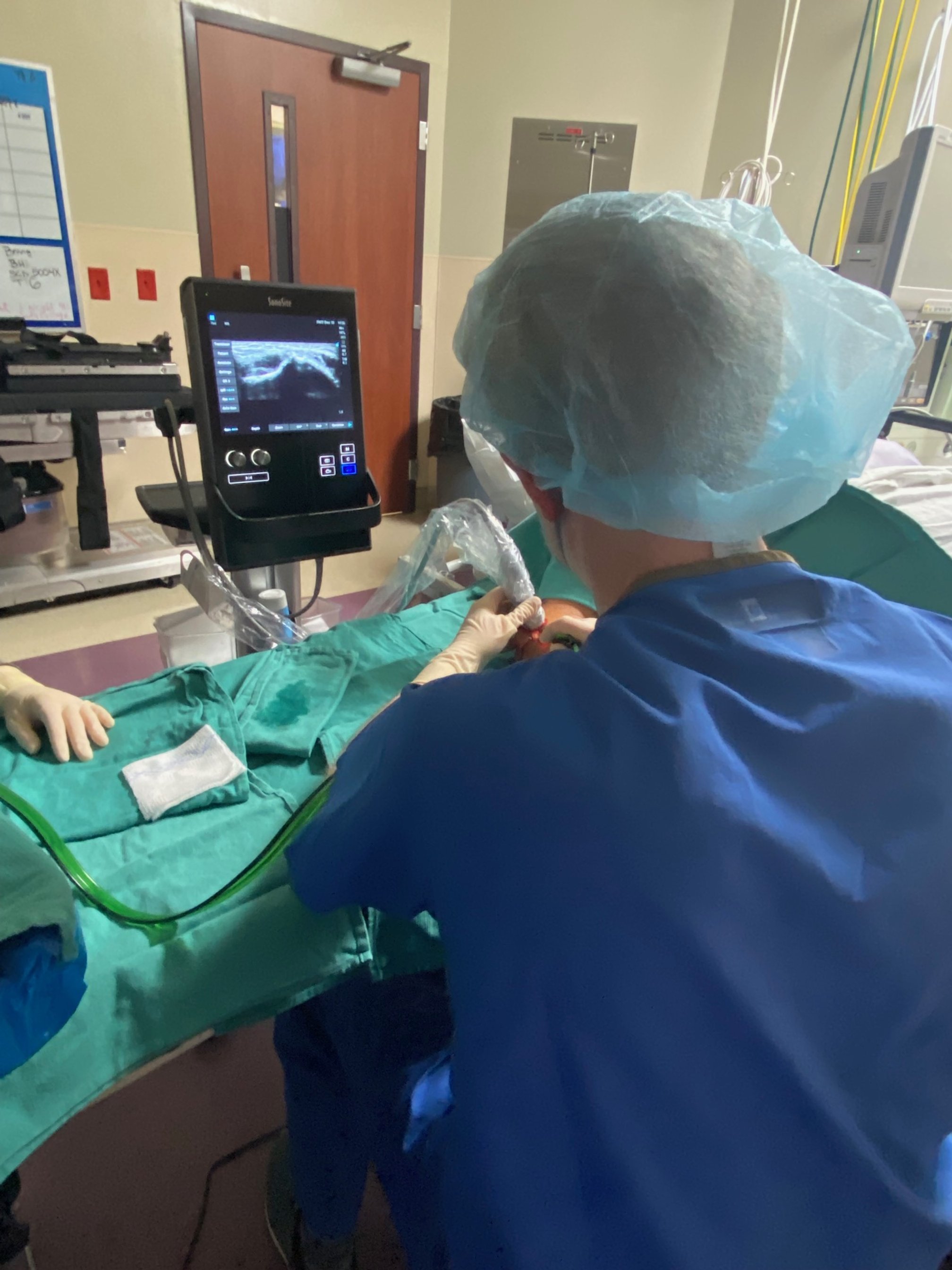
/Proactive Interventional Orthopedics (PIO)…a concept we will continue to promote. What does it mean in orthopedics to be proactive over reactive? Here are some examples and brief explanations:
Choose maintenance and more long-term injections over short-term steroid/cortisone injections: platelet-rich plasma (PRP) and hyaluronic acid injections often produce a more clinically significant and longer duration of benefit than steroid injections. For your knee and hip arthritis, tennis and golfer’s elbow and plantar fasciitis, just to name a few, choose these injections.
A course of physical therapy over exercises you simply found online: patient outcomes are generally better when you work with a physical therapist over Dr. Google or YouTube. We have fantastic relationships with physical therapists across Middle Tennessee and can work with you to find the best fit.
Regular use of supplements over prescription or over-the-counter medications: there’s a time and place for prescription meds when managing orthopedic conditions. However, for long-term management, we prefer options like curcumin/turmeric, collagen, and glucosamine/chondroitin. That being said, it’s always wise to consult with a physician before starting new supplements.
Don’t wait for your pain or disability to reach high levels before you seek treatment: orthopedic conditions treated early after the onset of symptoms and when pain and dysfunction are at a low level typically respond better to less-invasive treatments, and this early treatment can lower the risk of further damage to the joint or tissue.
Choose a specialist over a primary care physician for your orthopedics needs: PCPs work really hard and a do a great job to care for your overall health, but they do not necessarily have the expertise, the tools such as on-site imaging and advanced equipment or the time to dedicate to your orthopedic conditions.
Healthy eating patterns over a fad diet: weight loss is a vital part of the treatment plan when it comes to weight-bearing joint problems like hip and knee osteoarthritis. Through a variety of options, we can help you a structure a plan to gradually lose weight in a manner that the weight will stay off and through means that can be maintained for the long-term.
As always, let us know if we can help you overcome an injury, treat an orthopedic condition or find the pathway to greater wellness with an improved quality of life!
F. Clarke Holmes, M.D.
Frozen Shoulder: More Than Just a Winter Occurrence
/We’ve talked a lot about PIO (Proactive Interventional Orthopedics) recently and this concept really applies when it comes to a frozen shoulder, also known as adhesive capsulitis. This is a condition most commonly seen in middle-aged women around the time of menopause with the average age of a frozen shoulder being 51.
It starts as shoulder pain, often unrelated to a particular injury or overuse situation, and is followed by a very stiff shoulder with loss of motion. Although a frozen shoulder can be a self-limiting condition, with our interventions, we can greatly expedite the recovery process while alleviating pain.
Other risk factors for adhesive capsulitis include thyroid disease, diabetes and recent shoulder surgery. In the early “pain” stage, it’s often difficult to determine whether a patient has a frozen shoulder, osteoarthritis, or rotator cuff and/or biceps tendon problem. An MRI can be helpful, especially to see tendon or joint pathology, but in the presence of isolated adhesive capsulitis, the MRI can be normal or near normal. The next stage is the “stiff” or “frozen” stage, highlighted by the loss of motion both actively (what the patient can do) and passively (how someone else can move the shoulder). The final stage is the “thawing” or “recovery” stage. Each stage typically last 2-6 months, and early treatment often shortens these stages.
Being proactive and interventional often means an ultrasound-guided steroid injection into the joint. Without ultrasound guidance, it is often very difficult to achieve accuracy. This tends to be a very inflammatory condition, and thus, the potent anti-inflammatory effects of the steroid can provide rapid relief of pain. Early treatment within the first few weeks or months of the onset of the shoulder pain is the optimal path to a faster and more complete recovery. After that steroid injection, a rehab program, often made much more effective by the steroid injection, is the mainstay of treatment. 20% of patients with a frozen shoulder develop the same condition on the opposite shoulder within 5 years, so if pain in the other shoulder develops, it’s wise to seek treatment early.
Check out this brief article:
Steroid injection may be the best medicine for frozen shoulder - Harvard Health
If you think you may have a frozen shoulder, let us use PIO to help you!
F. Clarke Holmes, M.D.
Introducing the Concept of PIO
/As sports medicine providers, we are all about “getting ahead in the game.” Therefore, we have coined the term and are developing the concept of PIO (“pie-o”). PIO stands for proactive interventional orthopedics. You’ve possibly heard of interventional cardiologists or interventional radiologists. These are the physicians that are specialists in their field, but use less-invasive means to treat your condition. For example, the interventional cardiologist will perform angioplasty or a stent procedure, whereas the cardiovascular surgeon would be the physician to do the more-invasive coronary artery bypass surgery, when necessary.
In our field, PIO involves using less-invasive interventions such as injections, weight loss, physical therapy/exercise programs, and various supplements to “get ahead” of your musculoskeletal conditions that either currently are or will soon bring you pain, disability, and dysfunction. The field of orthopedics has typically been “reactive,” meaning you only go to the doctor when you have a significant problem. Unfortunately, when you are only reactive instead of proactive, treatment interventions become more invasive, higher risk, and sometimes less successful.
Here’s how we can use PIO to help you if have arthritis, tennis/golfer’s elbow, rotator cuff or Achilles problems, plantar fasciitis or other chronic conditions: we will customize a plan to reduce pain, improve function and quality of life in a cost-effective manner.
Here are links to two of our other blogs that explain the process and benefits of platelet-rich plasma (PRP) injections, often part of PIO treatment program.
Why Insurance Does Not Pay For Platelet-Rich Plasma Injections, But Why That Should Not Deter You — Impact Sports Medicine & Orthopedics (impactsportsnashville.com)
Five Simple Reasons You Should Consider Platelet-Rich Plasma — Impact Sports Medicine & Orthopedics (impactsportsnashville.com)
If you would like to discuss the concept of Proactive Interventional Orthopedics and how this may be a benefit to you in 2023, then please give us a call. We would love to customize a treatment protocol for you.
Why Insurance Does Not Pay For Platelet-Rich Plasma Injections
/Platelet-rich plasma injections, commonly known as PRP, have been utilized in orthopedics for at least the past 15 years. The first studies in orthopedics looked at PRP being utilized for tennis elbow, and the results were promising.
Fast forward 15 years and now platelet rich plasma has become a mainstay in the treatment of many orthopedic conditions, ranging from osteoarthritis to tendon and ligament problems. An estimated 60% of orthopedic practices now offer PRP to their patients and while some physicians can claim true expertise in this type of treatment, other practices remain novices when it comes to the application of PRP.
Now, to answer the question in the title of this blog, “why do insurance companies not cover PRP….” We will provide an educated opinion with several bullet points.
-Many insurance companies claim that PRP injections are “experimental.” Experimental is a very broad term that can be applied in numerous ways. What classifies something as experimental? In my opinion, this is something that has been utilized for a very short period of time and has very few studies or anecdotal pieces of evidence to demonstrate a sustained rate of efficacy. Meaning, this treatment hasn’t been used for very long, has not been used on very many patients, and we really don’t know what the short-term or long-term results are.
When it comes to PRP, I would say we are light years beyond the experimental stage. For many years, PRP has been used not only in orthopedics, but also in plastic surgery, wound care, dermatology/aesthetics and hair-loss situations, to just name a few. PRP has demonstrated a long track record of safety, and the overwhelming majority of studies demonstrate that patients benefit from these procedures. So, in my mind as a physician of nearly 25 years who has studied medical data for his entire career, I would no longer classify PRP broadly as experimental. Are more studies regarding PRP necessary? Of course. Yet this is true for every treatment in medicine. Trust me when I tell you that there are numerous treatments in all fields of medicine being utilized right now that have been studied far less than PRP.
-Next, the truth is that insurance providers these days are looking to pay for fewer and fewer of your medical expenses. We have to get away from the mentality that “I have health insurance, and it should cover all of my medical needs.” In truth, we are probably getting back to a model where insurance should be used for major health expenses and catastrophic situations, not for most of your routine day-to-day medical care. Almost all of private insurance companies are for-profit organizations. There’s nothing wrong with that. However, you must realize that their first goal is making a profit to sustain their business. Their first priority is not providing the optimal care for the patient, as often is the case, the optimal care is not the least expensive. So, we are constantly preaching to our patients these days that the best treatments in orthopedics are not necessarily the ones you can expect your insurance to cover.
-Finally, to partially take the side of the insurance company, an argument against covering PRP would be that it cannot be “standardized.” We can standardize a medication or certain forms of medical equipment, but we cannot standardize a patient’s blood. Therefore, one person’s PRP may not look like another patient’s PRP, meaning the number of platelets, white cells, etc. may be fairly variable between patients. Also, there are probably 20 to 30 commercially available PRP systems on the market now. None of these produce PRP in exactly the same way, once again, making the argument that PRP injections cannot be completely standardized. For this reason, insurance companies often take a pass on something they don’t view as uniformly the same treatment for every patient.
Now, let’s turn attention to why it really may not matter whether insurance companies cover PRP or not and why you should not be deterred from seeking this treatment.
-First, let’s look at the financial piece. So many of our private insurances require that we first meet our deductible before insurance will pay a significant portion of our medical bill. These deductibles are rising. Until you meet your deductible, you are going to pay out-of-pocket for any office visit, diagnostic test, medical procedure, or medication. Therefore, let’s say you were choosing between a steroid injection versus a platelet-rich plasma injection. Technically, the steroid injection is “covered by your insurance,” but until you meet that deductible, you are going to pay for an office visit and the cost of that steroid injection. So, “covered by insurance” doesn’t mean it’s an expense-free treatment.
-Next, that steroid injection may not be the best treatment for your particular condition. Let’s say you have a partial rotator cuff tear. You either don’t want or don’t need surgery for it. The steroid injection may temporarily alleviate symptoms, but certainly will not heal the partially torn tendon, and in fact, some patients worsen within weeks to months after a steroid injection. Thus, assuming you then are still seeking care for your shoulder pain and torn tendon, you will require additional tests and treatments. This may mean an MRI, a long course of physical therapy, additional medication, or even surgery. Those options, especially when combined, can be very expensive. Although platelet-rich plasma injections are not covered by insurance, they could be the long-term solution to your problem, saving you hundreds to thousands of dollars on other necessary potential treatments. Therefore, why not choose the treatment that will be most successful, not just the one that your insurance states that it covers?
-Finally, gone are the days that you can depend on insurance companies decide what is best for you and your health. I tell patients all the time that I literally could give them 10 steroid injections over the course of the year and cause bodily harm to them and their particular joint or tissue. Insurance companies would reimburse me to do this, often without question. Nevertheless, that is just not the right thing to do. I took an oath as a physician to “first do no harm” which I have continued to practice to the best of my ability. In addition, not only do I want to not do harm, but I also truly desire to help my patient. Therefore, I will help you choose what I believe to be the best and most customized treatment option for your particular situation. This is not always in line with what insurance companies would prefer that I do. I have no desire to be a “rogue” physician, but I’ve dedicated my career to developing an expertise to help my patients. Part of our ability to help our patients lies in the fact that we get to know them personally and their particular situations, goals, desires, comorbidities, and even their financial situations. Therefore, we work as a team with our patients to decide what we believe is best for them. Although it’s very natural to want to pay as little as possible but still get the best outcome, you just can no longer rely on insurance companies to have the authority over these decisions for you.
I realize what is said above gives you a lot to consider. I have a passion for educating our patients on the best treatments for their particular situation, and I am dedicating to doing that for the remainder of my career.
As always, please let us know if we can be of assistance to you!
F. Clarke Holmes, M.D.
Impact Sports Medicine and Orthopedics
Being Proactive When It Comes to Platelet‑Rich Plasma (PRP) Injections
/I am a 28 year-old nurse practitioner and former competitive athlete, and I am strongly considering getting platelet-rich plasma (PRP) injections for my knees. Why? For one, as a provider, I have witnessed many improved patient outcomes. Two, this procedure is safe, has relatively no side effects, and is minimally-invasive. Lastly, we are seeing that by being proactive with PRP versus reactive when symptoms are present shows even further benefit.
After many years of intense volleyball training, games, and working out without any downtime throughout the year, I developed bilateral knee pain. Although I have no x-ray evidence of osteoarthritis at this time, based on my symptoms, there is no doubt I have cartilage damage. Because of this, I feel that PRP injections, in addition to other conservative treatments I’ve used, will boost the longevity of my knees.
PRP helps soft tissue, joint, and cartilage pathology. It is a great way to use your own body’s healing system to improve musculoskeletal problems, and there is minimal risk because it uses your own blood.
What’s our process?
Obtain blood from a vein.
Spin it in a centrifugation system in our office. This separates the components of the blood and concentrates the platelets.
We take the plasma that has platelets that are rich in growth factors to create the PRP injectable solution.
The PRP is then injected under ultrasound guidance in the targeted area.
When injecting the PRP solution to the targeted area, it creates an espresso shot-like effect for your body’s growth factors and repair cells to travel to this area. The main goal is to help repair the damaged area, decrease pain, and improve function. Keep in mind that this is a slow and methodical approach that can take up to 6 months to see maximum benefits. Sometimes more than one PRP injection is needed. How long does PRP last? It varies based on the severity of the patient’s condition, a patient’s activity level, and incorporation of other conservative treatments. Cost can vary per practice. We typical charge $800-$950 (*subject to change) depending on how many locations we are injecting and which centrifugation system we use. Keep in mind that PRP injections are NOT stem cell injections.
My goal with this blog is to change the thought process that PRP injections should only be used reactively to treat orthopedic conditions and their accompanying symptoms to one instead that utilizes PRP in a proactive approach to slowly repair and stabilize conditions.
So, why haven’t I had PRP injections in my knees already? Honestly, the only thing holding me back is my nervousness when it comes to needles.
Interested to see if PRP injections would be helpful for you? We would love to have a consult with you to discuss these in detail!
Taylor Moore, FNP
Impact Sports Medicine and Orthopedics